We've gathered together some common questions about flying unmanned aircraft in New Zealand.
The permissions you need to fly your drone in New Zealand depend on how and where you want to fly.
See Where can you fly for more information.
There are three key things you need to actively check before you fly at these locations:
You don’t need a license to fly a drone in New Zealand under Part 101 unless you are conducting a night operation or intending to fly within 4km of an aerodrome, in which case there are additional training requirements or qualifications required. Further detail is provided in CATI:101-1 [PDF 194 KB].
If you need to fly outside the Part 101 unmanned aircraft rules, you will need to hold a Part 102 unmanned aircraft operator certificate.
There are certain areas where drones must never be flown, and other areas where there are strict conditions.
Please see:
Check the airspace before you fly
To see a map of these areas, or to apply for a clearance to fly your drone within controlled airspace, visit the AirShare website:
The Conservation Act 1987 requires any aircraft (including drones) taking off, landing, or hovering on conservation land to have a permit.
To learn more about applying for a permit, see the Department of Conservation website:
A shielded operation allows an operator to fly an RPA near a vertical object with reduced risk to other aviation participants. Examples of vertical objects for shielded operations include trees, buildings, pylons etc.
Shielded operations allows an operator to fly an RPA close to an object (within 100 meters) and not higher than 10 meters (about 33 feet) above the top of the object.
More guidance on shielded operations can be found in Advisory Circular AC101-1.
You can fly a drone unshielded at night so long as you have met all the requirements detailed in clause 2.11 (b) of CATI 101-1 [PDF 194 KB].
More guidance on flying at night can be found in Advisory Circular AC101-1.
You can fly your drone up to 120 metres above ground level (400 feet).
It’s important you stay below 120 metres so that your drone stays out of the way of other aircraft. If you come across low flying aircraft, you must land your drone immediately.
Learn about the other rules for flying an unmanned aircraft:
You can fly an unmanned aircraft as far as you are able to see its orientation, and objects around it, with your own eyes.
You need to watch your unmanned aircraft yourself and not rely on binoculars, a monitor or smartphone, unless through FPV. If something unexpected happens you need to be able to take immediate action to get your aircraft out of the way or land it.
Learn about the other rules for flying an unmanned aircraft:
How heavy your drone can be depends on how you want to operate it.
Your drone can weigh up to 25kg and must always be safe to operate.
There are no exemptions or relaxations for drones that weight 249 grammes or less. In other words, you must abide by all the drone rules regardless of weight.
However, if your drone weighs between 15kg and 25kg, it must be inspected by an approved organisation to check that it is airworthy first.
The following organisations or persons have been approved by the Director to do this:
If you want to fly a drone over 25 kg, or fly outside of the Part 101 rules, you must apply for a Part 102 unmanned aircraft operator certificate before you fly.
If you want to fly your drone in controlled airspace you need clearance first from air traffic control.
You can request this authorisation through the AirShare website or app.
You don’t need authorisation from air traffic control if you can fly your drone using a shielded operation.
The AirShare map can help you understand if there are any airspace restrictions where you want to fly.
AirShare – my flights(external link)
AirShare – airspace map for drone pilots(external link)
Learn about the other rules for flying an unmanned aircraft:
New Zealand drone rules aren’t separated into recreational and commercial rules like some other countries.
You must follow the Part 101 rules when flying your drone.
If you need to fly outside the Part 101 drone rules, you will need to hold a Part 102 unmanned aircraft operator certificate.
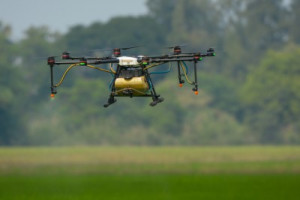 The aerial application of agrichemicals is a tightly controlled activity, which is regulated by Civil Aviation Rule Part 137 Agricultural Aircraft Operations.
The aerial application of agrichemicals can not take place under Part 101 and is prohibited under Rule 101.15.
That means, even if your drone weighs less than 25 kg fully loaded, you will still need a Part 102 Unmanned Aircraft Operator Certificate to perform this activity. Please contact us for more information.
Please consider investing in your own knowledge and skills by undertaking a drone pilot course.
