
A safety management system needs to evolve, adapt, and prove its value every day.
The CAA has developed and released an SMS ‘maturity assessment tool’ – to help operators understand how well their system is now performing, and where it can improve.
It’s been trialled across the general aviation community in recent months, with the CAA holding safety manager network days to bring people together and share their experiences.
Three of them talked to Vector.
But first, what is the maturity tool?
Instead of focusing on the setting up of an SMS, this tool looks at day-to-day effectiveness, highlighting what good performance looks like at different stages of maturity.
Built on international best practice and feedback from operators, it’s designed as a practical guide, not a checklist or scoring system.
You don’t submit the results to the CAA. You use the tool to identify strengths, spot gaps, and plan improvements.
A key feature of SMS implementation is the PSOE model, which describes four stages:
- Present – the SMS is documented and visible
- Suitable – it matches the organisation’s size and complexity
- Operating – it’s used in daily practice
- Effective – it’s having a positive safety impact.
While the assessment focuses on the ‘operating’ and ‘effective’ stages, operators may wish to revisit the ‘present’ and ‘suitable’ features whenever their structure, scale, or systems change.
The tool is structured around the same four SMS components used internationally – policy and objectives, risk management, assurance, and promotion – and breaks them down into 13 practical elements.
Each element includes:
- a short reminder of the minimum certification requirements
- ‘what to look for’ prompts to guide staff discussions and observations
- tables showing what good ‘operating’ and ‘effective’ performance looks like.
The focus is on two things: what you produce – such as audits, investigations, or training records; and whether those activities are making safety better.
“Importantly, this is not a pass or fail exercise,” says Penny Stevenson, the CAA’s Principal Advisor of SMS. “It’s a way to understand where your SMS currently sits, highlight what’s working well, and identify what needs further development.
“CAA inspectors will use a similar tool when they’re assessing your SMS. This ensures operators know what the CAA will be looking for, from a performance perspective.
“Maturing an SMS takes time – often years of steady learning, refinement, and industry experience,” says Penny.
A tool to stay safe during change
John Winter, the Safety Manager at Sounds Air, says the SMS maturity tool is helping him through substantial change at the airline.
“Sounds Air has been through a year of transformation – closing four bases, reducing staff, and retiring its Pilatus PC-12 fleet. Today we operate a leaner network of four Cessna Caravans focused on Cook Strait routes. That shift means a sharper focus and a renewed commitment to safety.
“Our SMS is well established and underpinned by a strong just culture,” John says. “Staff are confident to report incidents – even those involving themselves – which tells us the system is working. Reporting trends confirm high engagement, and the company has moved beyond compliance to proactive risk management.
“The SMS maturity tool represents the next step. Things change constantly – downsizing, avionics upgrades, staff turnover – so the tool helps us keep pace by breaking SMS into 13 components and showing what ‘operating’ and ‘effective’ looks like.”
The next big challenge for Sounds Air is a fleet-wide avionics upgrade. “Each aircraft will have its systems stripped out, and new ones installed and tested,” says John. “They’ll be out of service for up to six weeks, and the process will likely require CAA oversight.”
The airline also plans to introduce a fifth aircraft in 2026, adding complexity to scheduling and compliance.
“Every substantial change triggers a formal change management process,” John explains. “We identify all risks – technical, operational, financial – and put controls in place. The maturity tool dovetails with this approach by setting clear indicators for what excellence looks like. Safety is our primary duty.”
Collaboration and open systems
John believes the tool is suitable for every operator, large or small. “It shows what entry-level looks like and what operating and effective looks like. That’s valuable for everyone.”
He’s helping build regional networks of safety managers to share knowledge and support smaller operators. “The more we share, the stronger the industry becomes.”
Sounds Air’s SMS is open by design. “We invite reports from airports, Airways, other operators – even passengers. That 360-degree view helps us spot gaps and prevent accidents.”
John plans to treat the tool as a living document, accessible to senior management throughout the year. “They can add observations, and I’ll supplement that with audits and interviews. At year’s end, we’ll have a record of real progress, rather than a last-minute review.”
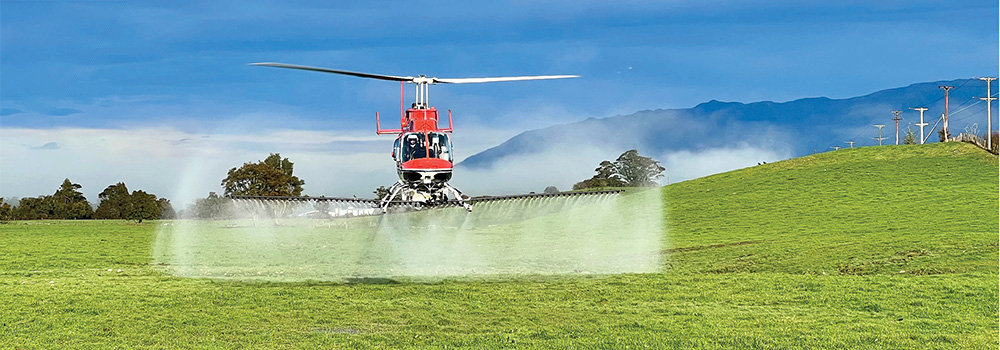
Photo courtesy of Ahaura Helicopters.
From checklist to game-changer
West Coast-based Ahaura Helicopters is a small New Zealand operator providing aerial services – including agriculture, hunting, and fishing – that requires strong safety practices and proactive risk management.
Safety Manager Debbie Lawn says when she first trialled the maturity tool it felt overwhelming.
“But once I started working through it, I realised how practical it was. I focused on a couple of areas, including emergency response planning.
“What really stood out was the ‘what to look for’ section. It helped me approach the questions as if someone in our industry was asking them, which made the process feel less like ticking boxes and more like real reflection.
“It prompted me to revisit our original SMS evaluation from five years ago, ensuring our documentation still fitted our size and risk profile. That review was invaluable ahead of our recent re-certification audit.
“The tool inspired one of our best drills yet – a mock emergency locator transmitter activation, with the Rescue Coordination Centre and the Department of Conservation.
“We set up a simulated Part 135 flight, complete with documentation, and a live call on speaker for the whole team. It turned into one of the best drills we’ve ever had. The live exercise revealed unexpected questions and gave us invaluable feedback – something we’d never have done without the maturity tool.
“It’s now part of my toolbox for continuous improvement and audit prep. I appreciate that the regulator provided the tool – it’s a great way to help us mature our SMS.”
Climbing the safety ‘ladder’
“Safety isn’t a certificate on the wall – it’s a living system,” says Steve Holtum, Operations and Safety Manager at Marlborough Airport.
“Audits will tell you where you are today, but they won’t move the dial. The maturity tool? That’s about planning how to climb the ladder. If your SMS is operating, you’re on the bottom rung. But getting to the next rung takes effort, resources, and planning. This tool helps us do that.”
Breaking down silos
One of Steve’s priorities for 2026 is improving integration across the airport precinct. “We want safety to run through everything we do.”
“We all get a bit siloed – airports, airlines, contractors. But safety and security overlap everywhere, so we need to make sure our SMS talks to, say, the airlines’ SMS. And a concrete example of our ‘why’ would be our joint responsibilities for the movement of cargo.”
Ongoing learning
Training can be another blind spot, Steve says. “We train people, tick the box, and move on. But do we check six months later if they remember the training? Is it effective? Are they applying it? That’s the loop we need to close.
“The maturity tool helps facilitate those conversations. It holds up a mirror. It asks, ‘Are you really following up?’ and ‘Are you integrated?’
“But you’ve got to go in with the right mindset. If you tick boxes, you’ll stay on the bottom rung.”
His advice? Start small. Pick a few areas that matter most and build momentum. “The maturity tool is like a spanner,” Steve says. “It helps us to build the machine. In 10 years, if we do this right, we’ll look back and see how far we’ve come.”
Consider joining a regional safety network
The CAA’s Penny Stevenson says the safety manager networks forming across the country are an important way for safety managers to share ideas, provide mutual support, and stay connected in a sometimes isolated role.
Groups vary in size and formality, from small gatherings in homes to meetings at aero clubs, but usually involve around 10 participants. The CAA supports these networks rather than leading them.
“The approach builds connections, gives guidance to new managers, and helps make sure safety practices are effective,” Penny says.
“The networks provide both a platform for collaboration and a practical way to embed SMS maturity across the sector.”
More information
Read more about Safety Management Systems and the SMS Maturity Assessment Tool.
Main image iStock.com/PrathanChorruangsak