
As the temps drop, regularly setting off in your piston-engine aircraft without pre-heating or warming it, is a safety, maintenance, and financial issue.
Cold weather, warm start
“Around 5 degrees and below, take a few minutes to warm the engine before moving off. In a Cessna, there’s about nine litres of thick oil to get warm and thin out and get around that big engine.”
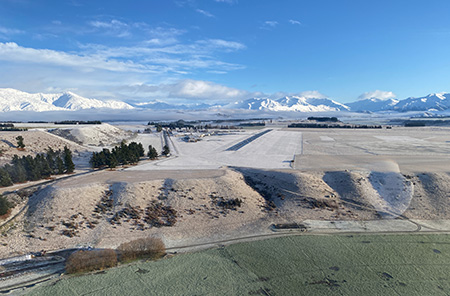
Wānaka aerodrome. Cold weather can reduce a battery’s effectiveness by up to 50 percent.
Photo courtesy of Wanaka Helicopters.
That’s Joe Calder talking. He’s been a pilot in the Deep South for almost 30 years, so he knows what he’s talking about.
“I did it the wrong way, myself, once. I just opened up the throttle, and it was a bit ‘surgy’ on take-off, and I realised the oil was cold.
“I went round, did a circuit, landed, and recycled the prop.1 The oil was now warm, and I took off fine. I made sure it was never an issue again, by always warming the engine.”
Joe’s also a B-cat instructor at Otago Aero Club. What does he tell his students about cold weather starting?
“Don’t just start them up and rip the heck out of them. It takes only about five minutes, in a Cessna say, to warm the engine. In Rotax 912 series engines, the oil temperature needs to be 50 degrees Celsius before flight.
“And that’s not a lot of time, or trouble, considering what could happen to you once you’re flying.”
What could happen to you once you’re flying?
Safety

Around 5 degrees Celsius, take a few minutes to warm the engine. It’ll save you money at overhaul time.
Photo: iStock.com/Chris Gordon
How about catastrophic engine failure after take-off?
Viscous, cold oil can trigger hazardous pressure surges within the engine system. This excessive pressure may cause oil lines to fail or the aircraft’s oil cooler to rupture.
If a line ruptures, the engine can lose its entire oil supply in a matter of seconds – leading to a complete loss of engine power shortly after take-off.
Or how about an engine fire on the ground, caused by over-priming?
“If you give it four primes normally,” says Joe, “don't go giving it 12 or 13. It will, literally, dump a whole pile of fuel into the engine, backfire, and possibly ignite in the exhaust pipe or the carburettor.”
Richard Rayward of Lake Tekapo-based Air Safaris, calls it a ‘cough back’.
“If it ignites,” he says, “it’s essential not to stop cranking – even if that seems counter-intuitive. Keeping the start going will suck unburned or burning fuel back to the place it’s supposed to burn.”
While such a blaze can be relatively easily contained, if a pilot is hit by ‘startle’ and doesn’t quell the flames quickly, the fire can spread to air filters, hoses, or cowling materials, or even become an external engine fire.
“I’ve seen two aircraft burn to the ground due to over priming and backfiring,” says CAA Aviation Safety Advisor (Airworthiness) Richard Lane.
“If an ignited cough-back hasn’t happened to you before, it can give you quite a scare because there can be a significant fireball.”
Richard Rayward says that once any flames have been contained and the engine has started, “…and running normally, shut down, get out, and investigate the aircraft for residual burning or damage.”
And Richard Lane advises to then get the aircraft checked by an engineer.
And if you’re lucky enough that your overpriming has simply flooded the engine, and the fuel has not ignited, Richard advises walking away, and having a cuppa for half an hour before trying again.
“Hopefully, you’ll have been able to sit your aircraft in the sun, to let it warm up, during that time!” he says.
Maintenance and money
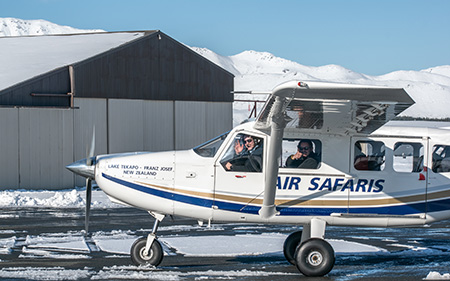
Richard Rayward of Air Safaris advises ‘judicious’ use of priming (plus throttle) is enough to make sure there’s sufficient fuel for a cold start.
Photo courtesy of Air Safaris.
Damon Himburg is the Engine Shop Supervisor at SouthAir – a Part 145 engine overhaul facility based at Taieri Airport at Mosgiel.
Damon sees the accelerated damage done to piston engines by pilots over-eager to get into the air on cold mornings.
“The engine is made of differing types of metals because they have different jobs to do. Our aircraft cylinders are made of a mixture of a steel barrel and an aluminium cylinder head. And the pistons – which go up and down, or sideways, inside the cylinders – are also made of aluminium. The aluminium has a greater rate of expansion than the steel. When the engine is stone cold there’s a lot of clearance between the pistons and the cylinder.
“But if you’re moving before the engine is ready, the pistons will expand faster and ‘nip up’ against the cylinder.
“That’s the sort of thing I see – scrapes and marks where the pistons regularly expanded faster than the cylinder. It can actually cause partial or full engine failure, but at the very least, it will damage the engine.”
Damon Himburg says it’s several tens of thousands of dollars to overhaul an engine.
“It can be anything up to $75,000 to overhaul a 172. And overhauling a Cessna 180 could be knocking on the door of 100 grand.
“If you make a habit of not warming up the engine before take-off, you’ll wear out the components pretty quickly. You’re constantly asking them to perform some literal heavy lifting, with little, if any, protecting oil to help.
“Considering how much you invest in your machine, why would you do that?”
What you do do
The oil
All oils are affected by temperature,” says Simon Spencer-Bower, “and tend to thicken as the temperature drops. An engine will be harder to turn over during starting when the oil is cold and stiff.
“Some oil manufacturers produce variable ‘weight’ oils, known as multi-viscosity oils, which flow more freely because they’re thinner, which promotes faster lubrication.”
So again, talk to your engineer.
The battery
Damon Himburg says good battery and starter motor health is essential to a safe start in the cold.
“You need to look after them to make sure they’re in good condition. Cold weather significantly reduces battery effectiveness – sometimes by up to 50 percent.
“If we try to start an engine with a battery that’s getting old and tired, it can actually burn out the starter. The motor is trying to draw too much current out of the battery.
“So watch for sluggish cranking and don’t try to fix that by hammering the starter.”
Getting the battery tested every 12 months, is part of annual maintenance. But Damon says if you suspect that your starting system is not performing as it should, get advice from your engineer.
Pre-heating
“Pre-heating the aircraft – which comes before warming – using a heated hangar, is ideal,” says Richard Lane.
“Alternatively, use an electric, low-wattage system that provides heating to the general engine area, keeping both the engine cylinders and the oil sump warm. You could do this together with a nose blanket.
“Some aircraft owners choose to use a form of temporary under-cowl heater, but the problem here is that if not removed before flight - and pilots do forget - it can blow off or fall off in flight and get caught in the gubbins of the engine."
The Winter Flying [PDF 2.2 MB] Good Aviation Practice booklet recommends heating pads attached to the bottom of the oil sump. This is a reasonably inexpensive way of raising the oil temperature.
“Use approved winterisation kits (eg, oil cooler covers) if temperatures are below 4°C … to ensure the oil reaches proper operating temperatures,” the booklet says.
"Finally, take care not to overheat the engine components because this can cause its own form of damage," says Richard Lane.
Simon Spencer-Bower says some manufacturers produce ways to help in low temperature engine warming.
“For example, Guimbal have a small plastic cover that can be installed to partially restrict airflow to the engine cooling fan in the Cabri G2 helicopter. This helps the engine reach its operating temperature more quickly during start-up.
“But it’s important to remember that this must be removed when temperatures increase. Failing to do so may result in excessive engine temperature during warmer conditions.”
Richard Lane says the same about the winterisation kits. “Make sure you remove them when air temperatures begin to rise.”
Slowly, and with care
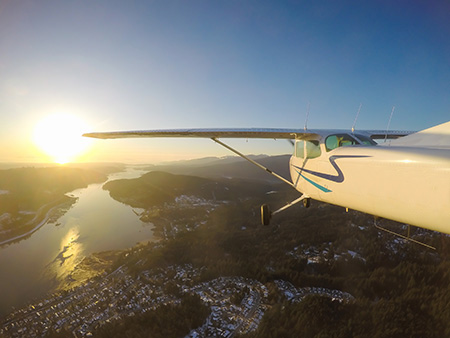
The overhaul of a Cessna 172 can be as high as $75,000.
Photo: iStock.com/edb3_16
If you haven’t done any of these things – or even if you have – your aircraft is going to have to be nursed into life, slowly and with care.
Simon Spencer-Bower recommends using an external power source, if necessary.
“In light aircraft and helicopters equipped with 12-volt electrical systems, a jump pack or jumper leads connected to another battery may be a practical option.”
But he warns that in disconnecting external systems, such as start carts or jumper cables, extreme caution should be exercised.
“If the engine is running and propellers or rotor blades moving, there’s a serious risk of injury. Maintaining situational awareness and following established ground handling procedures is essential to be certain personnel remain clear of all moving components.”
Once your power source is sorted, it’s time for some prudent priming.
Richard Rayward advises ‘judicious’ use of priming (plus throttle) is enough to make sure there’s sufficient fuel for a cold start.
“Try to get an immediate start rather than repeated or continual cranking on the starter.
“And avoid a burst of high RPM on initial start – keep idle RPM low – no higher than 1000 – 1200 RPM – initially.”
The aircraft engine manufacturer, Lycoming, says it’s very tempting to just keep grinding away with the starter in an attempt to get it going.
“Should this happen to you, RELAX. Take care of that starter, or it may fail,” it says.
“The general rule for starters is that they should only be operated for short periods, then allowed to cool.
“If engine start has not occurred after three 10-second periods of operation with a pause between each, a five-minute cooling off period is required.
“Without this time limit for operation and an adequate cooling off period, the starter will overheat and is likely to be damaged or to fail completely.”
Simon Spencer-Bower says an experienced pilot learns to manipulate the throttle so that its opening has an effect on the air that’s pumped through the engine.
“Just as we compensate for cold and dense air by adding more fuel for start, it may also be appropriate to reduce the air part of the mixture when the air temperature is very cold.
“Closing the throttle slightly will reduce the amount of air going into the carburettor, therefore enriching the mixture ratio.
“This may require some experimentation to determine what’s needed to achieve the correct fuel/air mixture for any particular aircraft in any temperature range.”
Carb heat
In winter, or cold damp conditions, there’s more likelihood that carburettor icing will form, especially when the engine is at idle or low power settings.
“Using carb heat,” says Simon, “although primarily used to prevent carb ice, can assist in start-ups and warm-ups.”
Get some advice
“Do exactly what the Pilot Operating Handbook says,” Richard Lane advises. “Not all aircraft systems are the same, but if you read the POH and really understand and follow what it’s telling you to do, you’ll have a nine out of ten chance of a successful start in colder weather.
“Engines are different and need different requirements to start successfully. An engine nearing the end of its operating life might have different starting characteristics than one which is brand new or fresh off overhaul. So repeating, read the POH, follow what it says.
“And talk to your engineer, or instructor, or your fellow pilots. Their advice will pay dividends – especially at overhaul time.”
Footnotes
1 CAA Aviation Safety Advisor Richard Lane says, that when doing the 'run up' prior to flight with a variable pitch propeller (oil temp in the green), the standard check across most types is to cycle the prop three times to check that the blade pitch change system is operating correctly.
“In doing so it also allows the warm oil in the engine system to circulate though the propellor governor and hub assembly.
“Cold viscous oil doesn’t flow too well and if the prop has not been cycled, thick cold oil is what will be in the system. Subsequently when power is applied, there may be a delay(s) in operation of the pitch change system, as the governor attempts to change the supply of oil to the propellor to control the blade pitch for take-off rpm.
“This can cause surging during the takeoff roll and climb out. If it’s really cold, cycle the prop four or five times, this will make sure you’re getting that nice, warm oil into the propeller.”
Main image iStock.com/AmandaLewis