
Aircraft service information
There’s a plethora of service information for an aircraft. Here’s a summary for you to digest, then read 'Ignore service information at your peril' down below.
From the manufacturer to operators and maintainers
Service letters and service bulletins are documents from aircraft and component manufacturers. They come under a variety of names but collectively they’re referred to as manufacturer service information.
They’re all important for operators and owners to take note of, but they do differ in their urgency.
For example, service or information letters are often non-aircraft related material – like, how long the company will be closed for Christmas. But some service letters can be alerts to maintenance issues. Without reviewing them, you just don’t know which category they fit into.
Service bulletins, on the other hand, can be:
- alerts addressing a new safety concern – the manufacturer will state in the bulletin how critical the risk is
- recommended modifications or inspections that may improve costs or safety
- mandatory actions (instructions for continued airworthiness) established as part of the type certification process, such as propeller or engine life limits.
If it’s deemed serious enough, the manufacturer will make the service bulletin mandatory. This may signal to the aviation industry that a mandatory airworthiness directive issued by the National Airworthiness Authority – in New Zealand that’s the CAA – will soon follow.
For more information about service bulletins and service letters, read:
This provides guidance to aircraft owners and maintenance engineers to help them assess whether they need to comply with manufacturer service information.
Issued by the CAA
Airworthiness directives (ADs) are mandatory airworthiness requirements issued by the Director of Civil Aviation. They include a date or timeframe for compliance, or for an inspection to be carried out.
Continuing airworthiness notices (CANs) are similar to a service bulletin, but they're released by the CAA, not a manufacturer.
CANs alert and educate the aviation community about an ongoing issue, and recommend action to mitigate the issue. While not mandatory, operators and owners have a responsibility to take note of CANs in exactly the same way as they would for manufacturer service information.
Have a procedure to review
“It’s beneficial for an operator to maintain a list of applicable manufacturer and vendor websites where service information is published,” says CAA Inspector Richard Bennenbroek.
You can sign up to be emailed alerts, but Richard warns that email can be unreliable, so you should have a procedure to regularly check for updates.
“Emailed alerts can go to junk mail, so we advise operators to regularly review the website themselves.”
To get an email alerting you to published airworthiness directives and airworthiness issues, subscribe to our email notification service.
Also see airworthiness directives and continuing airworthiness notices.

Ignore service information at your peril
It’s the operator's responsibility to ensure an aircraft meets all airworthiness requirements. This responsibility cannot be delegated to an engineer.
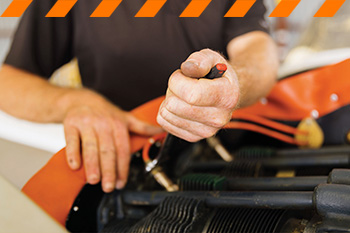
Photo: CAA
Reading, understanding, and acting on manufacturer service information is often perceived as part of maintaining an aircraft – and therefore the responsibility of a LAME (licensed aircraft maintenance engineer).
The reality is, however, that service information is fundamental to ensuring the airworthiness of the aircraft and is, therefore, the responsibility of the operator.
As CAA Airworthiness Inspector – and LAME – John Caulton says, operators assessing service information, as it’s issued, is a crucial part of an aircraft’s continuing airworthiness.
But John says that when he talks to an operator, often they haven’t reviewed manufacturer service information for many years.
“They tell me, ‘Oh, they’re not mandatory’, or ‘I leave all that to my LAME’.”
John says there are several problems with that approach.
- The operator is ultimately responsible for airworthiness, not the LAME.
- The LAME doesn’t always know the context in which the aircraft is being operated from one week to the next. So, in some cases, they may not know exactly what service information is relevant.
- The review of airworthiness (RA) is there for the IA (inspection authorisation) certificate holder to check that all maintenance is performed or assessed in response to manufacturer’s service information, and is appropriately recorded. But, because there’s often not enough time at the RA, it should not be assumed that the IA holder will actually review the service information itself.
- Additionally, some service information may need to be actioned sooner than annually.
- The operator must look at the whole context of their operation and ask, “Is this service information about a risk relevant to me?” If they don’t know the technical side, they might involve their LAME, but not leave it solely to the LAME.
The rule
Rule 91.603 General maintenance requirements requires operators to ensure their aircraft are maintained in an airworthy condition. To do this, operators should have access to all available instructions for continued airworthiness, which includes manufacturer service information.
This is to assess whether the information may apply to their aircraft, and to take the appropriate action, if needed. This assessment should be carried out by a knowledgeable person, and the outcome recorded in the appropriate logbook.
If you choose not to carry out the recommendations of an applicable service letter or bulletin, you should have a valid reason for it, and record that reason. This improves transparency and helps subsequent operators or engineers understand why a particular decision was made.
And heads-up, if your maintenance programme (approved by the CAA) states that you’ll comply with manufacturer service information – even the non-mandatory ones – and you don’t, you’re not complying with your approved documents.
The solution
Richard Bennenbroek says the most important thing operators can do is establish a procedure to access and assess manufacturer service information for applicability to their aircraft as it’s issued.
“Service information is an early warning – as soon as possible, have that procedure to review in place.”
The financial fall-out
There are clear benefits to taking action on service information, says Richard.
“Occasionally, service information will be followed by an airworthiness directive. The operator can prevent delays and additional financial costs if they’ve already acted by the time the AD is published.”
Change of owner or maintenance provider
Whenever an aircraft changes hands, the new owner needs to check the maintenance records to see which service information has been reviewed, and what maintenance has been carried out, says John Caulton.
“A new pilot or operator may use that aircraft in a different manner. They should consider what has, or has not, been done to that aircraft as it applies to the new situation and operations.
“That would include reviewing the aircraft maintenance logbook to make sure it’s been kept up-to-date, and that the service information has been reviewed.
“But we’re finding this is often not being done.”
Richard Bennenbroek says the value of an aircraft is often a reflection of the quality of its documentation.
“An aircraft’s records must include the details of service information that’s been reviewed. In the past, some sales of aircraft have fallen through because the documentation was not up-to-date.”
An operator’s or owner’s insurance may also be affected by ignoring service information and continuing airworthiness notices.
HSWA rules
All commercial aircraft operators have responsibilities under the Health and Safety at Work Act 2015.
CAA Principal Advisor of HSWA, Joe Hall, says that such businesses must do everything reasonably practicable to keep themselves, their workers, and anyone else affected by their operation, safe.
“That duty reaches into how equipment is maintained.
“When maintenance documentation is mandatory via an airworthiness directive or some other binding requirement, there’s no grey area.”
Joe says things get more interesting with advisory and guidance material.
“Service information does not carry the same legal weight as an airworthiness directive.
“However, that does not mean you can simply set them aside. Under HSWA, you’re expected to manage risk based on what you know, or reasonably should know, about the hazards in your operation.
“When service information is issued, it’s a clear signal that a particular hazard has been identified, and that there are recognised ways of dealing with it.”
If something goes wrong after an operator ignores manufacturer service information, they’ll have a hard time arguing they have reasonably managed the risks, says Joe.
“The difference is whether the operator actually engaged with the guidance.
“If they’ve read the information, thought carefully about whether it applied to their situation, and recorded why they took a different approach, they’re in a much stronger position than someone who simply ‘never got around to it’.
“The takeaway is simple – service information is worth your attention. How you respond to it, and whether you can show that you responded, matters!”
More information
Our new Aircraft maintenance and airworthiness GAP booklet: Download [PDF 2.3 MB] or order a free copy.
Attend a CAA Airworthiness and Maintenance Workshop.
Footnote
Main photo: CAA