
Good radio communication and robust situational awareness would have avoided a heart-stopping close call.
A private helicopter was on a cross-country flight when it landed for a couple of minutes at Rangiora aerodrome. The PIC wanted to check an issue with the flight instruments.
At the same time, a Cessna 152 with a CPL aboard was readying for take-off.
The pilot heard a helicopter make a departure radio call, but did not take much notice as he was head down, undertaking his ‘run up’ tasks. He then made a radio call that he was taxiing to the hold point for Runway 07.
He called again a short time later that he was lining up and rolling 07, vacating to the west. He assumed the helicopter had already left the vicinity.
But the helicopter began lifting as the Cessna pilot began his departure.
They headed toward one another.
The Cessna pilot became aware of the helicopter bearing towards him and took prompt avoiding action to the right, to cross behind the helicopter.
They missed colliding by six seconds. The aerodrome manager said later that it was the closest to a collision he’d seen.
Neither pilot filed a report with the CAA, although the Cessna pilot did tell his chief flying instructor when he landed back at Rangiora.
Neither pilot felt they were close to a collision.
The CAA’s findings
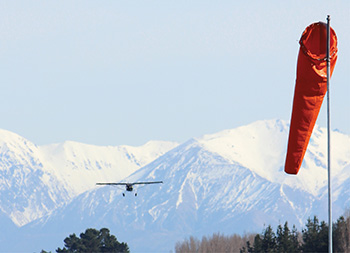
Photo courtesy of Lily Cook.
The helicopter pilot didn’t make a joining call before landing, which would have provided other pilots with greater visibility and situational awareness.
The helicopter pilot did make a radio call before lifting off but that lift-off was delayed. A further radio call to the Cessna would have clarified and confirmed the helicopter pilot’s intentions.
The helicopter pilot had seen the Cessna start its take-off roll, but decided he could maintain separation so continued his departure.
Airways information indicates that the degree of horizontal separation (172 metres) and the nature of the converging aircraft, would have led a reasonable and prudent PPL-H holder to consider aborting their departure.
The Cessna pilot acknowledged there was an opportunity between hearing the helicopter’s pre-liftoff radio call and beginning his own departure to have another look and make another radio call, just to confirm the status of the helicopter.
Safety lessons
The near miss incident at the unattended Rangiora aerodrome was, in part, due to the crew of each aircraft failing to effectively monitor the radio and undertake a visual scan. This resulted in an incorrect mental model of the other aircraft’s position and intentions.
These findings1 reinforce the importance of effective radiotelephony procedures, and a good lookout scan.
Footnote
1 Based on the lessons learned, and discussed with both pilots, the investigation was closed with a ‘no further action’ outcome