
The fires have already begun, but they’re predicted to get a lot worse. This is what operators can be doing right now to prepare.
Getting ready
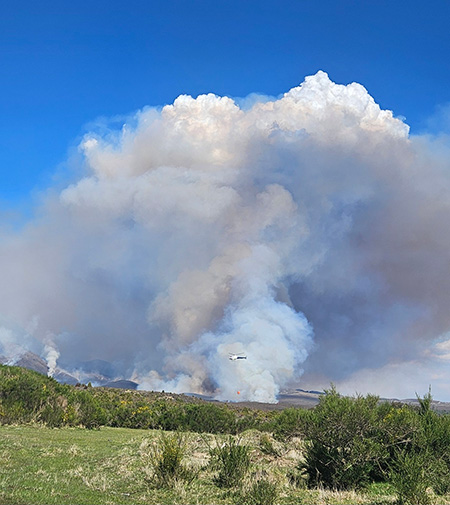
Photo courtesy of Fire and Emergency
Very aware of what this summer’s El Niño conditions may bring, Motueka-based CTC Helicopters Tasman has been preparing well ahead of time.
CTC owner Patrick Amberger says the operation has been pulling some of its maintenance forward, so they haven’t got anything substantial to do over the fire period.
“The last thing we want is something kicking off and we’re stuck in maintenance.”
Patrick, who’s fought fires for 15 years, says a once-over-lightly visual check of firefighting gear is pretty inadequate preparation.
“It might seem okay, but until you actually start using it, you don’t know whether you’re going to have some problems.”
CAA Flight Operations Inspector Neil Dodds agrees, recommending that firefighting gear be put into a regular maintenance programme.
“That means those things come up when they’re due and get tested, with no last-minute commotion.
“Otherwise, at the season’s first call, you could discover problems with the buckets, or the lines aren’t really operational, or there’s issues with the cargo hooks, or with comms.
“Operators who don’t check this stuff ahead of time, can find themselves in the middle of a fire, and having to run back to get a foamer1, or having to repair or change a cargo hook, or having to get maintenance out to sort it – you want to avoid that kind of drama.”
A-Cat (H) Jono Cummings, the training and safety manager for Way2Go HeliServices, in Rangiora, agrees that preparation well ahead of a possible callout, is key.
“After every single fire we do, our ground crew pull the buckets out, wash them, and check it all works. If we need parts, we buy new ones, so we know they’ll work okay.
“We do this because, in a call, it takes pressure off and it buys time.”
Jono says Way2Go has bought buckets fitting any of their three – differing – firefighting aircraft.
“If something happens with one of the aircraft, we can easily swap this ‘universal’ bucket to another one – no fuss.”
Patrick Amberger says that, as the summer approaches, all CTC firefighting gear is kept close and easy to grab.
“It’s all on hand, so we’re ready to react as soon as it kicks off.”
Currency, competency, humility
Patrick says CTC’s three firefighting pilots are also being put to the test ahead of summer.
“We’re spending time doing practical training and dropping some water beforehand.
“We need everyone on point. We don’t want to look silly out there, do we?”
Jono Cummings says even with training, pilots themselves need to be honest about their ability to fight some fires.
“I may have demonstrated competence fighting fires a year ago, but these are perishable skills. Being current helps, but it doesn’t automatically mean I’m still competent today. Lifting a few logs over winter doesn’t necessarily prepare me to long-line a monsoon bucket.
“And it’s okay to say, ‘Actually, I don’t think I am up for this particular fire on this particular day’. I have to be a bit humble about that.
“I was part of the response to the Port Hills fire in 2024. In one area of that operation, a pilot took a look and said, ‘No, this one’s not for me.’ And I really admired that. He was observing his personal limits and not getting all wrapped up in the moment. He was thinking about safety, not glory. Because I stayed and the other pilots stayed, doesn’t mean we did the wrong thing either. On that day, as on any day, everybody’s personal limitations are different, and we all have to be honest about that.”
And the call comes…
Assessing risk
Jono says while pre-callout checklists and procedures help with being organised and reducing the pressure, pilots should not think that, having filled out a checklist, risk ‘disappears’.
“You can pre-assess risk by ticking checklists and filling out forms. But there does seem to be a belief with some pilots, that, having done that, they believe ‘there’s no risk anymore, I filled out the checklist’.
“There’s no number of forms or checklists that absolve you from risk. You can’t outsource threat and error management to a whiteboard sitting back in the hangar.
“You have to reassess the risk once you’re in the air and challenge your earlier decisions about whether it’s going to be safe.”
Avoiding emergency mentality
Jono cautions against pilots developing an ‘emergency mentality’ and rushing out, possibly a bit unprepared.
“There is underlying pressure sitting with you as soon as you’re called out. You want to help, and you want to help quickly – but I ‘push pause’ and make sure everything’s right first. Because if I just allow myself to get swept up in the moment, I’m in danger of doing things that I haven’t thought through.
“Every time we get called out, we get our gear pretty quickly. But after that, I stand in front of the machine and go, ‘Okay, let’s stop a minute’. And sometimes the others are a bit confused about why I’m slowing things down. But I ask, ‘Do you know where you’re going? Have you got your phone? Have you got the bucket, have you got your helmet? Are we missing anything?’ I’ve had things sneak up, without me realising what was happening, so I think a little bit of paranoia about what could go wrong, is a good thing.
“I always say, ‘If you’re not nervous, you should be worried’.
“So you’ve got to physically, intentionally, stop and think that stuff through. Otherwise, you bowl off and you’re halfway there, and you’re saying, ‘Oh I forgot that bit’ or ‘I forgot to bring this thing’. And now you’re preoccupied with what you’ve left behind and maybe not doing your job properly.”
And once you’re in the thick of it
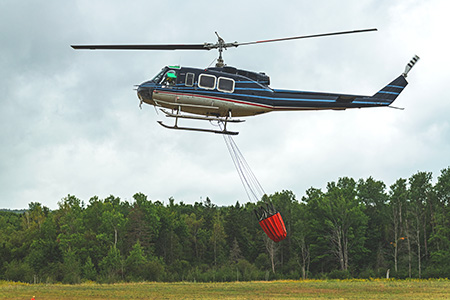
Photo: iStock.com/shaunl
Patrick Amberger says all blazes are different and require a different response.
“They’re all technical in their own way, and some can be quite complex. The fuel loadings can be different, the geology varies, the environment changes. You can have a tussock fire, or one moving through heavy timber. Or it can be close to houses. It can be slow or fast-moving. No one is going to force a pilot to stay if a particular blaze doesn’t suit their skills.”
One of the best things I ever heard about aerial firefighting, says Jono, is this: ‘it’s your job, not your emergency’.
Patrick Amberger agrees, saying no one is going to force a pilot to be there.
He agrees with Jono that it’s important the firefighting pilots don’t get ‘mission mentality’.
“You can’t get wrapped up in the emotions of it. Yeah, it’s just our job, you know, so you can’t go getting too excited about that sort of thing.”
“If it’s getting dangerous we’ll pull the pin. It’s not like anyone’s forced to be there, so, you’ll hear it come across the radio, ‘This is getting silly, guys, I think it’s gone too far. There’s too much wind. We’re going to shut down.’ Nobody gets pushed into taking undue risk.”
Patrick says fighting large fires from the air can be quite demanding.
“There’s always a designated lead pilot and they establish a circuit for us all to follow. Above us is what we call the ‘air attack’. That’s a hovering helicopter with a Fire and Emergency ‘director’ in it, who directs us what to do and where to go, where to dump the water and so on. If there’s lots of aircraft, sometimes two circuits will be established, so we minimise the chance of getting in each other’s way.
“You do have to plan your entry and exit. You can’t just bowl on in there and drop your water, because you’ll get into trouble quite quickly. There has to be a planned circuit and a planned exit out of it.”
The biggest hazard
Large scale wildfire operations can involve many aircraft working over a single fireground, creating a complex and demanding operating environment.
A key hazard in aerial firefighting is inadvertent entry into IMC caused by smoke-reduced visibility.
Pilots can encounter these conditions while bucketing or even during more routine tasks like repositioning for fuel. Maintaining situational awareness is key.
As a result, IIMC awareness and avoidance training should be part of pre-season preparation. This helps pilots recognise deteriorating conditions and have a plan B if visibility is unexpectedly lost.
Radio calls
Firefighting pilots have to be a model in making effective radio calls.
“With possibly 10 aircraft up there,” says Patrick, “you need a really clear picture in your head of where everybody is. That includes making the ‘dip’ call before you fill the bucket in a nearby water source.”
Mitigating fatigue
Patrick says you can be on a fire for eight to 12 hours a day, and you need to manage your times, dependent on what work you’ve been doing the day before and what work you have on tomorrow.
“You’ve got to be aware of, and manage, any fatigue. But if it’s a well-managed fire, if you’ve got a good person running it, it definitely makes things a lot easier and a lot safer on everyone.
“Fire and Emergency are pretty good about ‘calling’ the fire. We’ve got to make sure that we’re all home before civil twilight, so they’ll say ‘right, time to head home. You’ve got 30 minutes up your sleeve. We’ll see you here at 8 o’clock in the morning.’
Patrick says the “amazing” ground firefighters then take over through the night if the fire is still raging.
“They go pretty hard. They work in some terrible conditions, stinking hot and steep and dirty, and yeah, those guys do some really good work on the ground. So we can go home, get rested up and then come back and do our best the next day.”
Patrick says that despite the inherent danger in firefighting ops, he enjoys doing something to benefit the community. “It’s challenging, but, yeah, I enjoy it, it’s good.”
Recreational pilots who want to ‘take a look’
“The guys and girls putting out fires are working in an environment that’s changing fiercely,” says CAA’s Neil Dodds.
“So where you see the smoke at the moment, where the helicopters are operating, that can change dramatically with the wind shift.
“So, to go and stooge around, and have a look, you’re really putting yourself, and them, at huge risk.
“So, plain and simple, stay away. It’s an environment that these guys are set up and trained to operate in, in the safest way they possibly can.
“You get in amongst all that, and you’re putting lives in danger – in the air, and on the ground.”
Read the companion to this article: What the coming El Niño summer means for aviation
Footnotes
1 A device containing fire-suppressing foam concentrate.
Main photo courtesy of Fire and Emergency