
In a blaze, conditions change rapidly, and multiple aircraft work at low level.
Despite those risks, recreational pilots are repeatedly entering temporary restricted airspace1 without clearance.
Two incidents during firefighting operations in Tongariro National Park illustrate the problem. The CAA Investigator who looked at these events says either incident could have resulted in a mid-air collision.
National parks, particularly Tongariro, are high-traffic, high-risk environments during fire operations. Aircraft may be operating at similar altitudes, with limited capacity to see or avoid unexpected traffic.
Experience doesn’t prevent mistakes
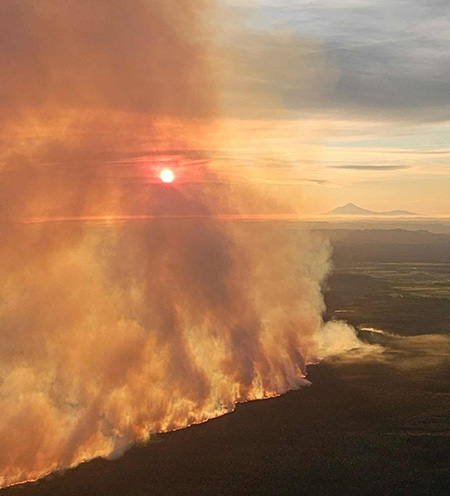
Photo courtesy of Fire and Emergency NZ.
An experienced pilot inadvertently entered an active firefighting restricted area (RA) involving more than 20 aircraft, including helicopters. They came within about 500ft of a helicopter assessing fire damage.
The pilot didn’t have approval to enter the RA, and made no effective radio calls. The temporary restricted airspace was operating on multiple frequencies, but the pilot was monitoring the wrong one.
“Once this pilot was inside the RA, being on the wrong frequency meant he couldn’t coordinate with the traffic around him,” says CAA Investigator Sam Fulton. “Operating on an incorrect radio frequency only increased the risk.
“Even highly experienced pilots, familiar with the area, can be caught out by complacency that results in airspace infringements.”
Temporary restricted airspace is special use airspace that operates under restrictive conditions. To enter, it’s essential to:
- get approval from the administering authority listed in the NOTAM
- use the published radio frequency
- follow all operational instructions.
“But it’s quite simple,” says Sam. “Keep out unless you have approval.”
Changing plans? Re-check NOTAMs
Skipping NOTAMs and altering plans on the fly is a reliable way to inadvertently end up inside temporary restricted airspace.
In the second incident, a private pilot set off on a well-planned cross-country flight, having completed a NOTAM check on the PreFlight tool – gopreflight.co.nz – before departing.
En route, the pilot made a last-minute diversion to have a look at fire damage in the national park, but he didn’t check his inflight NOTAMs to match his new flight path.
Unaware, he flew into temporary restricted airspace, 1000ft AGL but below the published upper altitude of 2000ft AGL, greatly reducing separation and collision avoidance margins.
The aircraft came close to a drone carrying out authorised survey work – within about 150ft vertical separation and 500 metres horizontal separation.
“When you’re using flight planning tools, they’re effective only if you review all relevant tabs – especially en-route NOTAMs – when deviating from your original plan. It’s especially important for cross-country and scenic flights,” Sam Fulton says.
Keep away
“These incidents are happening too often,” says Stephen Bishop, Senior Specialist Aviation Lead at Fire and Emergency New Zealand. “If they continue, we could see a significant accident.
“Temporary restricted airspace protects pilots, emergency aircrew, firefighters on the ground, and the public.
“So stay clear of firefighting zones – like you would for any other RA – unless you’re authorised to be there.”
Footnote
1 Temporary restricted airspace is designated by the CAA under Part 71 to restrict aircraft and drone operations so life and property are protected during specific emergencies – like a wildfire.