
A change to what’s displayed on BP fuel bowsers, and how it’s displayed, means pilots have to be particularly careful about following good fuelling practice.
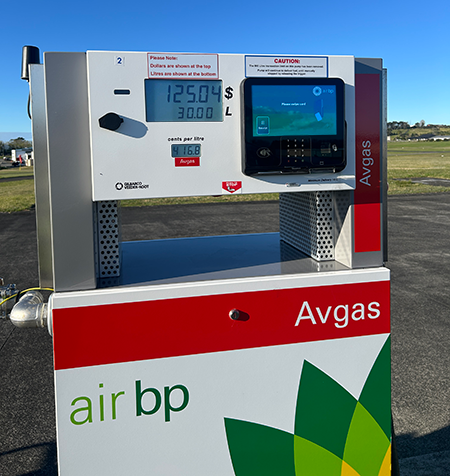
Photo courtesy of North Shore Airport
The CAA has received several reports during 2026, of pilots mistaking the number of litres of fuel they’ve just pumped into their aircraft, for the amount of money it’s just cost them.
In what it says was a customer-driven change, BP recently changed its fuel bowsers so the dollar value of what’s being pumped is now being displayed, not just the amount of fuel being pumped. The dollar amount is on the top, in large font, and the number of litres is below, in smaller font.
This introduces an unintended human factors element where pilots could mix the two figures up, inadvertently putting in less fuel – about three quarters less – than they intended.
In fact, this has already happened on a handful of occasions.
One pilot described to Vector what happened recently at a South Island aerodrome. “It was a busy fuel bowser with several aircraft queued up waiting, so we were in a hurry to fuel and move the aircraft – boom! – the numbers of dollars, not numbers of litres, went into the tank!”
In another event, the pilot had to divert from his intended destination to get sufficient fuel to return home.
On another occasion, the pilot thought they’d loaded 40 litres of fuel, but there was only 11 in the tanks. The discrepancy was fortunately identified by an instructor through a cross-check of the aircraft fuel indication, before departure.
As Logan Healy, Safety Manager for North Shore Aero Club, says, controls against an occurrence caused by mis-reading the bowser display rely on pilots and instructors identifying the error before flight.
“If it’s not detected, it could reasonably result in fuel exhaustion and an engine failure in flight.
“After the first instance of this happening at North Shore Airport, we made sure that all pilots knew to follow the controls already in place. They are, firstly, to dip the fuel tanks after refuelling. Then, on starting up, making sure the quantity on the fuel gauge of the tank dipped, agrees with the quantity dipped.
“We’ve also encouraged pilots to report such incidents, because that helps us understand the scale of the problem, and whether the controls are still effective.”
According to one report to the CAA, multiple pilots have unintentionally refuelled an incorrect amount following the change.
“This represents a …human-machine interface risk,” says the report. “[And] aviation history demonstrates that unit and indication confusion can have serious consequences.
“Well-documented examples such as the Gimli Glider1 accident highlight the importance of clear, unambiguous presentation of critical quantities.”
Logan Healy says that Air BP has developed improved placarding for the pumps to make it clear that dollars are shown at the top and litres shown at the bottom. It’s also exploring other improvements.
“We’ve suggested that if the display configuration cannot be changed,” Logan says, “an overlay, border or other visual treatment could be used to make the litres display more prominent.”
In the meantime, the message is clear – always double check your fuel load by dipping the tanks, and further cross-check with the aircraft fuel indicator.
Only then can you be absolutely confident of the amount of fuel on board, and of avoiding the dreaded sputtering, surging, and coughing of the engine – before complete silence – that heralds fuel exhaustion.
Now…
Read the GAP booklet Fuel management, specifically the 'Preflight fuel checks' section pages 13-16, as a reminder of existing guidance.
Fuel management(external link)
Preflight fuel checks(external link)
Response from BP
Approximately 140 new fuel bowsers displaying litres, dollars and cents per litre were introduced across Australia and New Zealand during 2025.
In addition, each bowser in New Zealand is fitted with prominent red signage clearly indicating that dollar values are displayed at the top of the screen and litres at the bottom.
More than 50,000 transactions have been completed across New Zealand aviation sites during the first eight months of 2026.
The new bowsers represent a significant modernisation of our refuelling network, enhancing functionality and supporting an improved customer experience. Additional payment options, including credit card and Sterling card payments, will be introduced in due course.
We’ll continue to keep customers informed as these capabilities are rolled out.
Footnotes
1 The Gimli Glider(external link) accident in July 1983 happened because a ground crew used pounds instead of kilograms to calculate the fuel load. The aircraft, a Boeing 767 with 69 on board, ran completely out of fuel at 41,000ft, but landed safely, largely put down to the gliding experience of the captain.
Main photo: CAA/Jess Jennings